ZeoFitRequest access

AI workout coach

The most efficient way to get gains.

A wide-angle camera watches every set and picks up what a workout log never sees: the way your reps slow down as your muscles get close to failing. From that, ZeoFit works out how many reps you had left, and whether the set was worth doing.

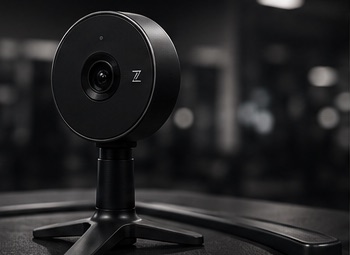
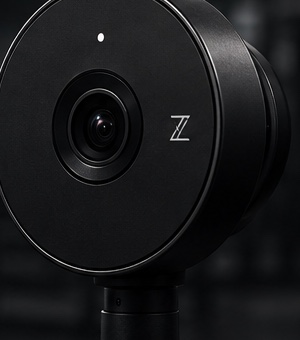
The ZeoFit camera: a matte black disc with a wide-angle lens, on a low tripod stand.

The only verdict that matters

Too easy
You stopped short. That set cost you time and bought you almost nothing.
Ideal
Close enough to failure that your body has to adapt. This is where you want to be.
Too hard
Past the point where more reps help. You will pay for it in recovery.

The problem

A set gets wasted in one of two ways.

A workout log can't see either one. It only knows what you typed into it.

It was easier than you thought.

Ten reps at 185 looks the same in a spreadsheet whether it nearly ended you or you stopped four short. How close you got to failure is what drives the adaptation, and no tracker can see it. Most people leave most of their sets on the table and log them as training.

It was harder than your form could take.

Technique doesn't fall apart evenly. It goes on the last two reps, on the third set, on the day you slept badly. Which is exactly when you're least able to notice. Experience doesn't save you either. Nobody can watch their own hips shoot back from under the bar.

The measurement

You slow down before you fail.

As a set gets close to failure your reps slow down. You can't move them any faster, however hard you try. That slowdown is the clearest visible sign of how close you got, and reading it needs nothing clamped to a barbell.

ZeoFit learns what your reps look like as fatigue builds, then turns that curve into an estimate of your reps in reserve. Everything else rests on getting this right for you specifically, so we show you the curve and not just a score.

Rep durationRange of motionindexed to the first working rep
Rep duration and range of motion across nine working reps of a leg press, each shown as a percentage of the first working rep. Rep duration rises from 100 to 266 percent while range of motion stays between 91 and 107 percent.0%100%200%300%123456789Rep duration214%Range of motion97%
A real leg press, filmed side-on. Nine working reps. The un-rack is not a rep, so it is excluded. The pressing phase went from 0.70s at its fastest to 2.74s at its slowest, nearly four times as long, while range of motion stayed inside an 11° band. He paid for the fatigue in speed and not in depth, which is what a set taken close to failure with technique intact looks like.
ZeoFit puts this to you as “your reps slowed 101%, and your range held”. That averages the first three reps of the set against the last three, which is steadier than comparing the two extremes you can see here.
View the measurements
Leg press, nine working reps. The un-rack is excluded.
RepDurationRange
11.03s72.8°
20.70s66.6°
30.83s71.5°
41.07s70.4°
51.10s71.5°
61.47s69.5°
72.10s77.8°
82.74s74.9°
92.20s70.3°
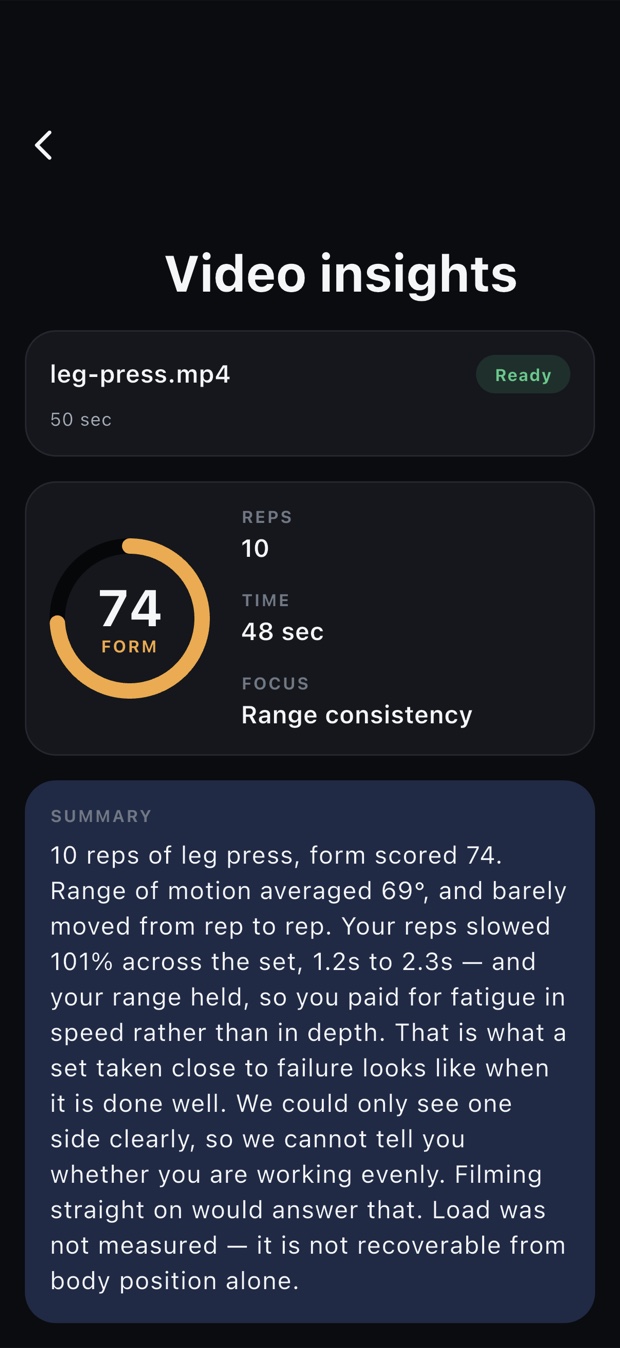
The ZeoFit app showing the analysed leg press: a form score of 74, 10 reps, and a written summary explaining that the reps slowed 101% while range of motion held.
The same set in the app, including the two things it says it could not tell from this angle.

Tempo

How long each rep took, and how that changed

The fatigue curve, and what the reps-in-reserve estimate is built from. If your reps slow while your range holds, you paid for the fatigue in speed. That's a set taken close to failure with your technique intact.

Range

How far each rep travelled, in degrees

Per rep and across the set: whether your range held from first to last, or quietly shrank while you kept counting them as full reps.

Reps

Counted off the joint that's actually moving

A lying tricep extension gets judged by the elbow, not by a knee that never enters the frame. We check rep counts frame by frame against real footage, including the tracking glitches that look like an extra rep and aren't.

Why a camera, not your phone

A phone can't point at you and coach you at the same time.

It is why ZeoFit is a device and not just an app. The rest of the phone problem is annoyance; this part you can't design around.

  • You give up your phone for the whole session.
  • You have to prop it somewhere, usually against a water bottle.
  • You move it again for every single exercise.
  • You lose the screen for music, messages, and everything else you do between sets.

Built for gym geometry

Designed for a room with nowhere to stand back to.

A phone camera is built for photography. This one is built for the actual problem: getting a whole movement from a few feet away, in a room you can't back out of.

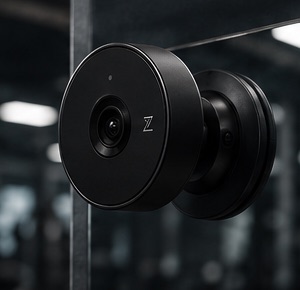
The ZeoFit camera held on a mirror by its suction mount, in a gym.
Suction cup onto the mirror behind the dumbbell rack.
The ZeoFit camera on its tripod stand, resting on a gym bench.
Or the tripod, on the floor beside whatever you are using.

An ultra-wide lens

Set it close to the machine and still get the whole movement, floor to lockout, without hunting for an angle.

Mounts three ways

Suction cup onto the mirror behind the dumbbell rack, magnetic mount onto a machine, or the tripod on the floor beside you.

Moves in seconds

Moving it has to be almost free, because you'll do it ten times a session. If it were fiddly you'd stop bothering by week two.

How it works

Set it down. Lift. Look at your phone after.

  1. 01

    Set it down and start.

    Stick it to the mirror, clip it to a machine, or stand it on the floor. Any exercise, any machine, anywhere you train. Nothing to strap on, nothing to set up between sets.

  2. 02

    It coaches you mid-set, out loud.

    It watches rep speed, range and technique the whole time, and the coaching comes through as audio and haptics. "Three in reserve. Keep going. One more. Productive set." You are under a bar and cannot look at a screen, so it talks instead.

  3. 03

    Pick up your phone and see the set.

    Reps, your reps in reserve, how much you slowed down, whether your range held, and what to do about the next set. Then it joins the record for that movement.

Over time

The part you only see after a few months.

ZeoFit isn't a workout log and doesn't want your sets typed into it. It does for training what a sleep tracker did for a night: take something you've always done blind, measure it the same way every time, and show you which way it's going.

  • Whether you really take sets close to failure, or only on the days you feel fresh.
  • Whether your range is holding as your load climbs, or you're quietly trading one for the other.
  • Which movement has stopped progressing, months before it shows up as a plateau.
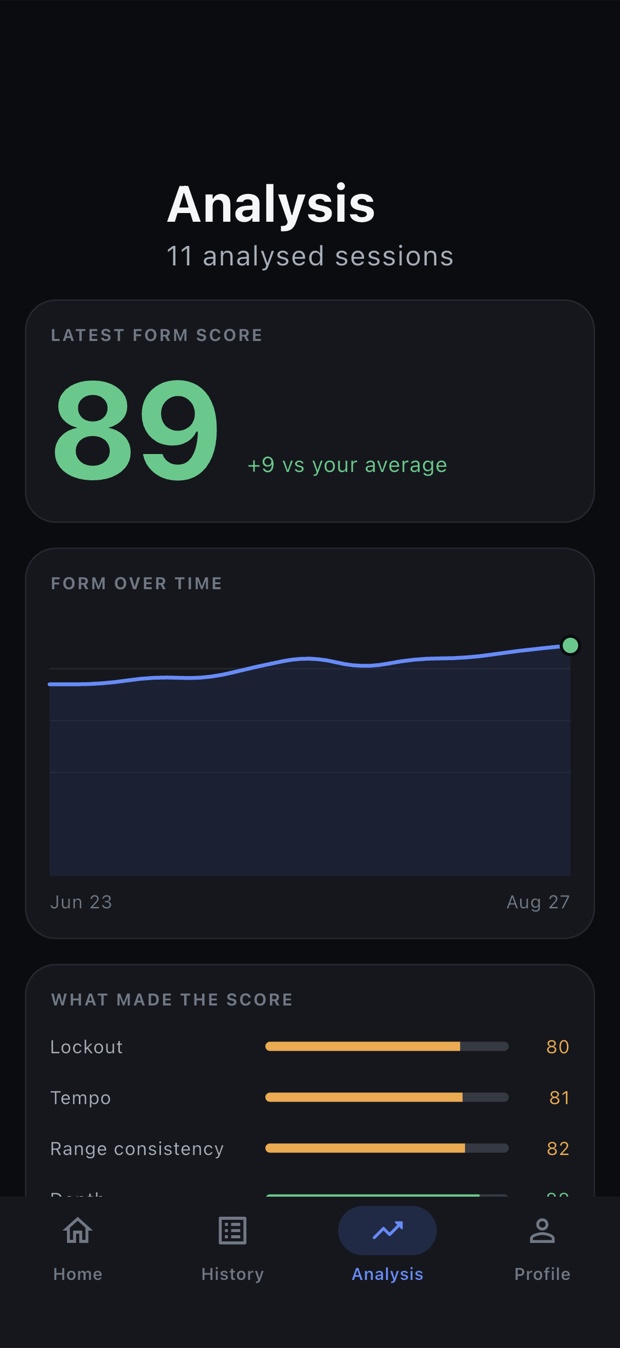
The ZeoFit app showing form quality trending across eleven sessions, with the contributors to the score broken out worst-first.
Sample data. The screen reads live sessions now, but nobody has twelve weeks of them yet.

Privacy

What happens to your video.

The plan is that video passes through and only the measurements stick around. It isn't built yet, so here is what happens today.

Your video is stored

A clip you upload stays on our storage after it's analysed. There's a retention setting in the app, and right now it records what you asked for without acting on it. So assume your footage stays. When that changes, this paragraph changes with it.

Audio is never recorded

The capture path asks for video only, the microphone permission is compiled out of the build, and a test fails if either stops being true.

Yours to delete, by asking

Ask and your account goes, along with every session and the analysis behind it. There's no button for it yet, so today that means emailing us.

Questions

The ones people actually ask.

What are reps in reserve, and why does it matter?

How many more reps you could have done before failing. It's the best single description of how hard a set really was, and it decides whether the set did anything for you. Lifters are famously bad at judging it in themselves. Most people stop several reps earlier than they think.

How can a camera know how close I was to failing?

Because effort is visible. As you tire, your reps slow down whether you mean them to or not, and the shape of that slowdown is a well-established sign of how close you are to failing. ZeoFit measures it across your set and learns what it looks like for you specifically.

Why not just use my phone?

Because a phone across the room can't also be the thing coaching you while you lift. That's the whole reason the camera exists. It stays on the rack, and your phone stays in your hand and stays useful.

Does it work on machines, or only barbells?

Any exercise, any machine, anywhere you train. Some measurements are meaningless on some movements. Those get switched off for that movement, so they never show up as a bad score.

Do I have to tell it what I'm doing?

No. It works out common movements on its own.

What does it cost, and when can I get one?

Neither is settled. Ask for early access and you'll hear about price and timing once they are.
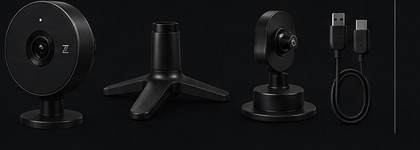
What comes in the box: the ZeoFit camera, a tripod stand, a magnetic mount and a USB cable.
Camera, tripod stand, magnetic mount, cable.

No more wasted sets.

Early access opens in batches. Tell us what you train and where, and we'll get you in.

Request early access